
-
 By HOM Social
- October 14, 2026
- 0 Comments
- CREATOR ECONOMY
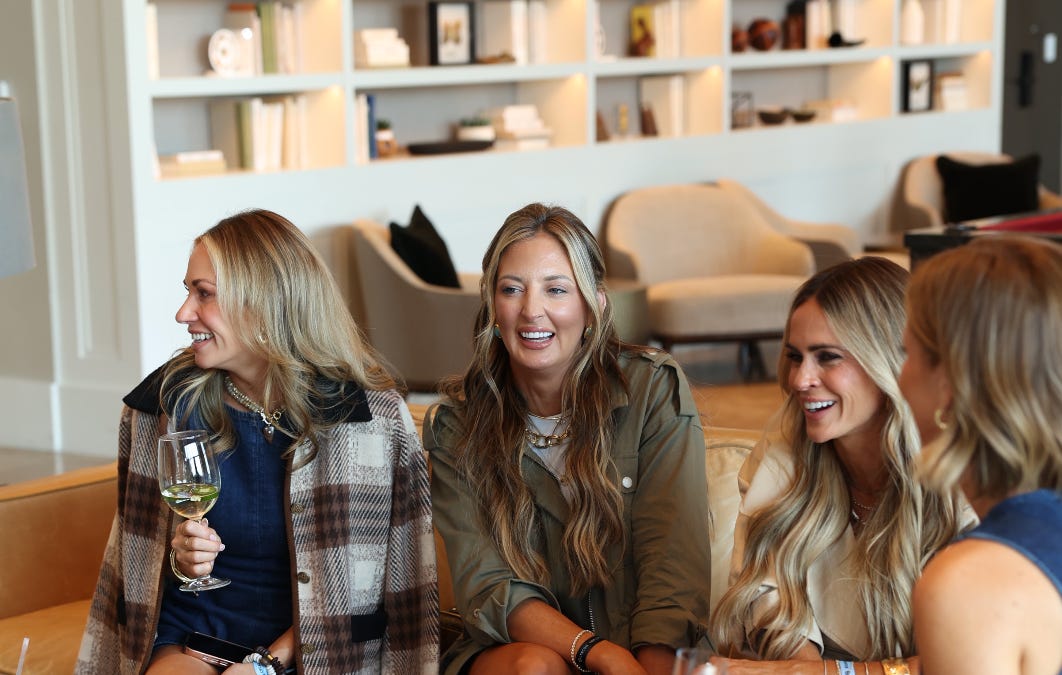
[Creators at LTK Con, via LTK]
This week I was at LTK Con 2026 in Dallas — it’s an invite-only event for affiliate creators, agencies, and brands on the LTK platform, and includes keynotes, workshops, and receptions hosted by brands, including Gap Inc., Abercrombie & Fitch, and Quince. I’m writing today’s newsletter on the flight home, unpacking my thoughts around the future of affiliate creator marketing.
On a completely unrelated note — In 2023, I said this industry needed more Keith Lee. This week, the MMA fighter turned food critic traveled to Gary, Indiana, on a humanitarian mission to help storm survivors. I’m revising this to say the industry needs to BE more like Keith Lee.
-
Instagram announced First Draft, a tool that automates your initial video edit
-
A new Threads test adds transcripts over podcast clips
-
Meta agreed to fund youth online safety initiatives — with some bizarre conditions
-
Instagram will set a two-hour daily time limit for users under 18
-
YouTube Shopping partnered with Amazon to allow product tagging
-
Pinterest Presents, an annual marketing fest, returns September 17
-
Special Report:
-
Inside LTK Con’s creator affiliate summit with founder Amber Venz Box, Gap Inc.’s Cory Weaver, and more
-
Predictive tech is taking the guesswork out of creator marketing — but there’s only so much you can automate when humans still drive trust and credibility
-
Pinterest, Snapchat, Instagram, Google, Substack and Dear Media all came to court affiliate creators
-
-
Instagram announced First Draft, a new auto-editing tool in the app meant to speed up the editing process. You select the clips and it gives you a first draft using your own footage. A rep was kind enough to answer my questions about it:
What is First Draft optimizing for? First Draft analyzes your selected clips to identify visually compelling moments (people, places, and actions). For talking-head videos, it also detects and removes silences and pauses. The result is individual clips you can easily review, delete, or rearrange before continuing to edit or post.
How many clips can it accommodate? There’s no limit on the number of clips you can select. You can bring in as many clips as you’d like, and First Draft will work across all of them to surface the best moments.
What is the length of the video it optimizes for? First Draft doesn’t target a fixed video length.
Will this also be available in Edits? No, it is not currently available in Edits.
-
Threads boss Connor Hayes says they are testing tools that give podcasters more ways to share their episodes on Threads. One example that has surfaced is a transcript that displays over an audio clip, so you can follow along with the sound off.
-
Meta announced an agreement to increase teen protections on the platform and will reportedly pay up to $18B in financial penalties — with some bizarre conditions. Meta says $5B will only be released if they see a similar commitment from TikTok and YouTube. Their announcement was actually labeled as an open letter to their competitors. It’s the corporate version of “I’m sorry, but…”
So, what’s being put in place? There will be a two-hour daily time limit for under 18s, a default block between midnight and 6am and notifications silenced during school hours, among other things.
Related Instagram News:
-
YouTube Shopping announced a partnership with Amazon that will let creators tag Amazon products in their Shorts, long-form videos, and livestreams.
-
YouTube is expanding Stations — its new’ish streaming experience — starting with a limited number of creators. It launched with Coachella TV back in April as a 24/7 interactive and uninterrupted music viewing experience. Stations will now include new formats like creator content, media channels, podcasts, and select new music artists.
-
YouTube is expanding custom feeds, letting you build and save multiple custom feeds, pinned to the top of your Home feed.
Related TikTok News:
-
Pinterest announced its annual marketing fest, Pinterest Presents™ 2026, streaming September 17. Special guests include Brooklyn Coffee Shop’s Pooja Tripathi and DJ Daughtry.
Predictive tech is taking the guesswork out of creator affiliate marketing — but it still can’t code for trust and credibility.
That’s my takeaway from LTK Con 2026.
LTK is a creator commerce platform that connects creators, brands and shoppers. It’s a creator economy OG that’s been around since 2012. If you’ve ever seen a creator say “link in bio,” there’s a good chance they were using an LTK affiliate link.
This was the fourteenth Con — an annual gathering of affiliate creators, agencies, and brands — and it marked the first time platforms like Pinterest, Snapchat, Instagram, Google, Substack and Dear Media showed up to court affiliate creators, who come with deep content archives and engaged audiences.
I unpacked LTK’s product announcement and what it means for the future of creator marketing overall — plus, how the platforms are competing to become the destination for affiliate creators.
LTK has a new agentic experience — it’s essentially predictive tech that helps brands identify the creators most likely to drive results based on prior performance and complementary aesthetics.
Instead of starting with a budget, a set of goals, and a few assumptions, brands are starting with a list of recommended creators and projected sales, according to LTK’s Chief Product and Technology Officer Ty Amell. “It takes the guesswork out of creator commerce.”
Teams that were previously mapping creator engagement in spreadsheets to forecast possible campaign performance will now be able to see anticipated business results trained on 15 years of creator-driven commerce intelligence.
We’re seeing a shift that positions affiliate creators as even more reliable sales channels — on par with paid media.
Affiliate has always been a bottom-of-funnel tactic. But if brands can increasingly predict which creators will drive those sales, affiliate becomes more than a way to track conversions. It becomes a powerful performance channel — one reason US creator ad spend is growing four times faster than the broader media industry.
That’s likely to redirect even more digital dollars, said LTK CRO Stephanie Sandbo: “We’re already starting to see a consolidation of teams — what was once an affiliate team and a social team and a brand team and a performance team is now becoming an influencer team.”
Creator marketing isn’t going away — no matter what the clickbait headlines say.
Creators are the ultimate mix of commerce and credibility — whether it’s an awareness play or for driving conversions.
“In a world of infinite content, people still want someone they can trust,” said LTK co-founder Amber Venz Box. “Someone whose taste they believe in, and whose life gives context to the recommendations they’re making.”
That trust becomes even more valuable as brands, especially retail brands, shift from an era of experimentation to wanting more measurable results — which means predictive insights and creator recommendations are becoming table stakes for influencer marketing platforms and social networks alike.
Meta announced its own automated Creator Marketplace recommendations earlier this year — awarding special badges to creator profiles that are predicted to drive the greatest sales results based on past partnership performance.
If AI can predict results, provide tailored recommendations and deliver real-time updates, what’s left for creator marketing teams to do?
Venz Box sees the need for skilled strategists. “Someone who can articulate the business objective. What I see from a lot of brands right now is creator for creator’s sake.”
But that only addresses part of the job. Because creators aren’t ad units — even when they’re being measured like them.
And the creator economy is still a relationship business, whether that connection is between creators and their communities or creators and brands.
“The highest-ROI creator budget line for any brand is a ‘flower budget,’” Gap Inc’s Head of Creator Marketing Cory Weaver told me. “When a brand focuses entirely on performance, they can forget creators are, above all else, human beings. Honoring that humanity means sending them flowers for their pregnancy announcements and engagements, sending comfort and condolences for tough times, and celebrating their wins.”
Performance doesn’t always beget trust and connection, added Weaver. “But trust and connection always beget performance. Automation, it turns out, can’t compete with peonies.”
There was another interesting signal at LTK Con: So many platforms were there because they all want the same thing — creators who can bring a steady stream of high quality content and engaged communities.
If you’re recruiting for potential Substackers, Snap Stars or Pinners, this was a good place to canvas for creators.
“We are here to make sure that creators understand that Snapchat should really be a part of their mix of platforms,” Snapchat’s Creator Partnerships lead Norissa Samuels told me, a sentiment echoed by most of the platform reps I spoke to.
Pinterest also rolled out the welcome mat for creators — walking them through optimizations for Pins, boards and profiles and pointing out that people come to the platform with the intent to shop.
Meta hosted a public Threads demo and a private session for affiliate creators on Instagram, Threads and Facebook.
Google was there encouraging creators to claim their Search profiles, a way for creators to have more control over how they appear on Google.
And Substack, which already has strong ties in the fashion and beauty community, was also looking to pitch its platform.
“We wanted a chance to connect with creators who are already on or curious about Substack,” said Carrie Marks, Head of Lifestyle. “And it’s really helpful to learn how they’re thinking about long form content, subscriptions, and building community.“
The message from all of them was pretty clear: even in the age of AI, tech still relies on creators for the one thing they can’t build — trust.
-
Creator marketing has become one of the fastest-growing channels for brands, with U.S. creator ad spend projected to reach $44 billion this year, according to the IAB.
-
China’s answer to YouTube, Bilibili, has relaunched its international app – Bilibili
-
There’s a new Twitter in town, and early access costs $20 – TechCrunch
-
What Good Good Golf’s controversial Callaway ad reveals about gaps in creator marketing oversight – The Creator Brief
-
What Lovesac’s viral complaint response teaches brands about the difference between clapping back and listening – PR News Online
-
Sony Music sues Kroger over unauthorized songs in social media posts – Net Influencer


