
-
 By HOM Social
- October 17, 2026
- 0 Comments
- CREATOR ECONOMY
Today’s newsletter is sponsored courtesy of my friends at Sprout Social
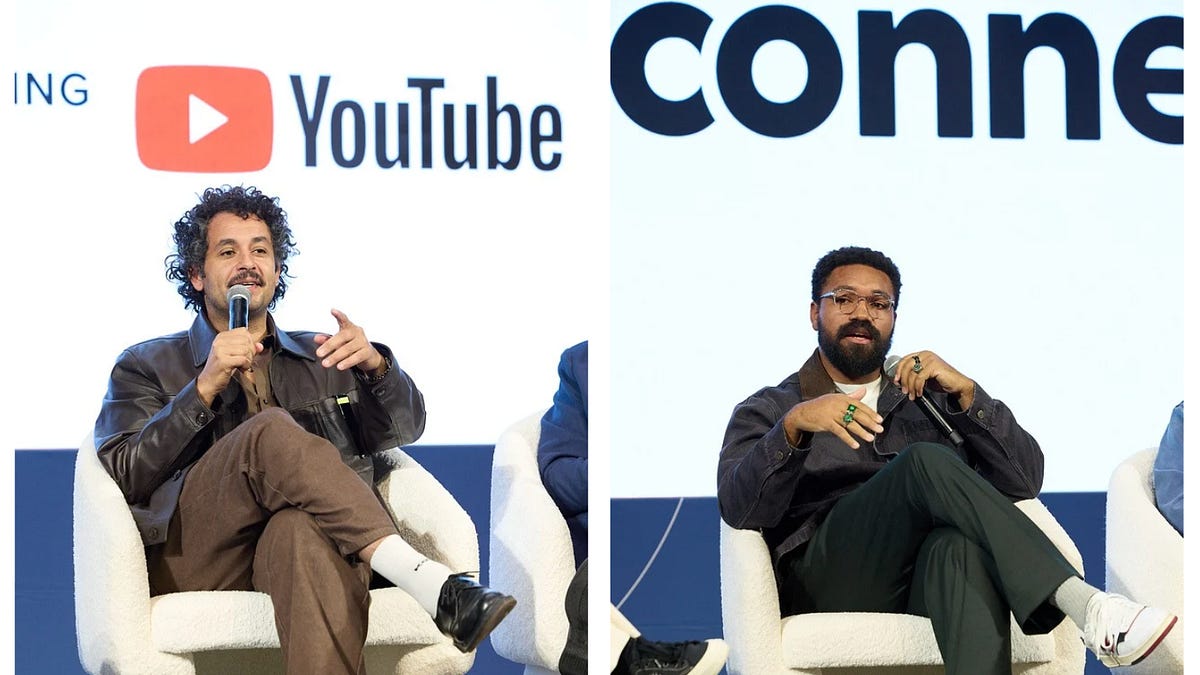
[CreatorIQ Connect: Kareem Rahma and Jordan Howlett]
This week’s been a whirlwind. I spoke at two conferences. Elsewhere, Colin & Samir gave away 25K to fund a dream project; CatGPT hosted a creator-entrepreneur brunch; LA Tech Week was in full swing. We are all fully activated. Plus, at the end of the month, I’ll be moderating a panel on employee creators and brand advocates for Sprout Social — hope to see you there!
-
Pinterest Report: 63% of Gen Z adults intentionally unplug, the highest rate of any generation
-
Instagram’s new tool lets you keep a reference Reel on screen for inspo 🙂
-
Instagram is removing the ability to link Reels together 😕
-
LinkedIn announced pre-roll ads across eligible creator and publisher videos
-
Creator Kareem Rahma (Subway Takes) shares his 2 favorite partnerships
-
Creator Jordan Howlett says his new role as Chief Content Officer is more than just optics
-
PepsiCo is in the early stages of exploring an employee-influencer program
-
RSVP: What should brands consider as they mobilize employee voices?
-
A new Pinterest report revealed that 63% of Gen Z adults now intentionally unplug, the highest rate of any generation. And when Gen Z do log on online, they expect the time they spend to be in service of their lives offline. The platform said it’s a shift marketers can’t afford to ignore. One example it pointed to was Starbucks Mexico and their efforts to reframe their café as the place where holiday connections happen. Working with Pinterest, they created a calendar feature with a pre-filled invite that could be sent to a friend or family member.
-
LinkedIn announced pre-roll ads and new ways to filter and search for B2B creators. The platform said it wants to give brands more ways to reach people, which lines up with research that shows marketers see video and expert voices as some of the most effective ways to reach younger B2B buyers.
-
YouTube is rolling out its Ask YouTube chatbot to mobile devices, making Ask YouTube now available to U.S. viewers across web, mobile and TVs.
-
Google released a new When to Buy Guide that uses Google Search and discount data to show you the best time to do your holiday shopping.

-
Instagram launched a new in-camera tool that lets you keep the Reel that inspired you next to your camera while you film. The reference Reel opens in a small window in your camera, so you can watch it as many times as you need before you record.
-
Confirmed: You’ll no longer be able to link Reels. Starting Oct. 28, a source confirmed that Instagram will remove the ability to link Reels together to simplify the overall Reels viewer experience. They’re testing several new overlapping ways to link content but no word on what that looks like next.
-
Facebook launched Your Algorithm, allowing you to fine-tune what you see on your Feed and Reels. Similar to Instagram’s Your Algorithm you can list your intereststo dictate what you want to see more of.
-
Instagram’s Edits app announced new features, including Audio links (to specific songs); Popular topics (Insights available in English for accounts with over 10K followers); Kits (save your colors, logo, etc.).
-
Meta’s audio-only glasses (full name Ray-Ban Meta Audio Glasses) are now available to purchase, starting at $349.
-
TikTok CEO Shou Zi Chew said people are using AI agents without understanding how they operate, and need to be more mindful of the permissions they’re giving.
-
Snapchat released a 2026 Holiday Insights Guide. According to the report, family and friends function as the number 1 point of influence on ultimate purchase decisions.
-
Roblox announced its third annual Creator Showdown — and its first-ever international esports showdown — streaming live from São Paulo, Brazil. Categories include Beat Battle and Anime FPS Jutsu Shooter:
-
Substack announced new in-app content preferences that lets you control what you see, whether it’s video, audio, longform, or community features; you can also mute specific keywords and phrases; fine-tune the topics you follow; and automatically label AI-generated material.
Trust doesn’t start with a brand handle anymore. It starts with the employees, creators, and everyday advocates that your audience already listens to.
So, what’s the smallest first step a brand can take if they don’t have a program to mobilize their most trusted voices?
Join me at Sprout Social‘s free Social Intelligence Summit where I’ll be asking some of the smartest people I know to unpack the opportunities:
-
Cory Weaver, Head of Creator Marketing – Gap Inc
-
Brandon Smithwrick, Founder – Content to Commas
-
Ari Berkowitz, Head of Creator Solutions – PMG
🗓️ Add to Your Calendar: Oct. 29, 2026 from 8am – 10am PT
I spent Tuesday at CreatorIQ Connect taking notes and moderating a panel with Jordan the Stallion. Below are the most actionable brand partnership case studies I heard that day.
Creator Kareem Rahma (Subway Takes) said brand deals have expanded significantly — and that brands increasingly help fund the entertainment consumers want to watch, with 60% of those views happening on television sets.
He was asked about his favorite brand partnerships by Tim Sovay, CreatorIQ’s Chief Partnerships Officer. Kareem highlighted two examples that show the value of working within an extension of the creator’s content universe. These brands aren’t reinventing the wheel, they’re building on existing formats in ways that feel natural to Kareem’s content.
-
Toyota’s Pit Stop Tonight, a four-episode YouTube talk show, that featured Kareem interviewing Toyota’s biggest racing drivers. “They came up with this amazing idea to do a talk show, they had this amazing deck of a fully fleshed-out format… I signed on to the project in the same way that Ben Affleck would sign on to a movie, where I go, “Great, the script’s amazing, this looks perfect, let’s do it!”
-
UPS adapted his Keep the Meter Running series into a mini-series featuring UPS drivers. “UPS said, ‘We love what you’re doing with Keep the Meter Running. We just want to adapt it so that you’re jumping in a UPS truck and then they’re taking you to their favorite small business that’s on their route.’ You’re visiting these small businesses and seeing why this relationship between the driver and the business is super important. Again, I was just a conduit for the conversation.”
Takeaway: The best brand partnerships don’t force creators to become someone else. They build on what already makes their content work, giving creators a strong concept to bring to life while making the brand a natural part of the story.

Creator Jordan the Stallion (famous for flinging his glasses) originally declined a partnership with Blenders Eyewear because he didn’t want to simply slap his face on ads endorsing the glasses.
The company came back and offered him a more meaningful role as Chief Content Officer. This is more than a vanity title, the C-Suite role embeds him within the organization with involvement in product development, ideation, production, and creative feedback.
I asked my panel — made up of Jordan, Greenlight Group’s Co-Founder Doug Landers and Blenders CEO Jack Gray — if it was a replicable partnership model. The reply: It’s complicated.
“The reality is, it’s a nice headline. But then no one cares 15 minutes later,” Gray told me. “The product has to be good. The content has to be good. It also takes a lot of trust on both sides to be like, ‘OK, you know what you’re doing. But also we need you to do this.’”
ICYMI: How do you even start to think about developing a C-Suite role like this?
Gray: “This is not a partnership. It is embedding Jordan within the organization. That was the structure that worked for us. You see a lot of people that work on the brand, which is very different than working in a brand.
ICYMI: Jordan, are you working with the marketing team day to day?
Jordan the Stallion: “I’m not sitting in the office but there’s online communication every day. The level of responsibility that I take with this job is very serious. It’s not some optic. On a daily basis, I want to make sure that these glasses are highlighted in some way.”
ICYMI: Has it been harder than expected to insert yourself into a corporate team?
Jordan the Stallion: “It’s not an easy task. Especially when I say ‘Yeah, I’m flying out of LA tomorrow.’ The compromise here is trying to be cognizant of their time, their timetables… If I’m on the other side of the world, in a different time zone, how can we meet in the middle?”
ICYMI: How do you think about maintaining the integrity of your channel as a creator versus the stuff you’re working for Blenders? These are two very separate things.
Landers: “The challenge of this relationship is, how do we make sure that we’re amplifying what Jack and his team want to do, but also taking this raw force that Jordan can bring to bear, and containing that to the degree it can be contained.”
Gray: “The challenge is we don’t want to pretend to be Jordan, but we also don’t want him to be like us. So how do we use this in one ecosystem that still makes sense? That’s something that we’re still trying to kind of figure out.”
Takeaway: I truly appreciated the transparency the team offered around this work-in-progress relationship. They’re still finding their footing between creative direction for brand campaigns versus independent creator content — making this a fascinating window into the evolving nature of brand-creator dynamics.
-
PepsiCo is in the early stages of exploring an employee-influencer program – Scalable
-
Nestle is in the process of merging its creator efforts into one strategic approach – Mike Shields
-
Toys R Us is opening 120 new standalone stores with select locations featuring Creator Studios – Lindsey Gamble
-
Microdramas are the next big bet for brands and the creator economy – Creator Brief
-
AI accountability is the new brand equity – Vogue Business
-
Brands should be careful about AI when marketing to Gen Z – The Current
-
A stunt to stop students from doomscrolling joins a growing wave of anti-content content – The Publish Press
-
Americans need to party more. A new class of IRL “community builders” is ready to help – The Atlantic
-
Influencer marketers are leaning into IRL events to cut through the noise – Business Insider
-
Young adults are most likely to be part of several kinds of online communities — whether about video games; beauty or fashion; movies, books or TV shows; hobbies; and fan communities – Pew Research Center
Talk to me about your 2027 social strategy — what are the platforms where you’re seeing some success vs. platforms you want to leave behind in 2026?!


